Repair or replace?
A tank water heater typically lasts around 8 to 12 years. Some problems are cheap repairs; others mean the tank is done.
| What you see | Likely cause | Usually |
|---|---|---|
| No hot water, gas unit | Pilot, thermocouple or gas valve | Repair |
| No hot water, electric unit | Element, thermostat or tripped reset | Repair |
| Hot water runs out fast | Failed element, sediment, broken dip tube | Repair |
| Relief valve dripping | High pressure or a failing valve | Repair; check expansion tank |
| Water leaking from the tank body | Tank corroded through | Replace |
| Rusty hot water, rumbling tank, 10+ years old | Corrosion and sediment | Plan to replace |
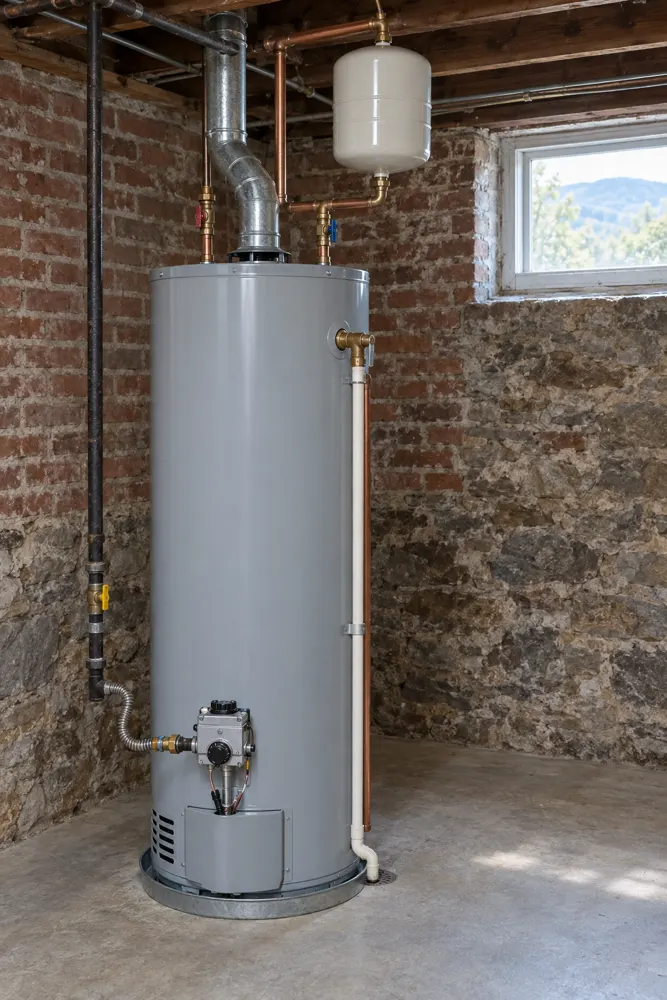
Replacement in the City of Roanoke needs a permit
The City of Roanoke's Business Owner's Guide lists water heater installation among the jobs that require a plumbing permit, and the city issues trade permits on demand through its mechanical, electrical and plumbing permit process. A licensed contractor handles the permit and inspection, which also protects you when you sell the house or file an insurance claim.
For a sense of cost, gas water heater replacements in city permit reports carried declared job values of $1,095, $1,800 and $1,959 (April 2018, July 2022). Prices have risen since, and your quote depends on size, fuel and venting.
Thinking about tankless?
We cover sizing, costs and conversions in detail on the tankless water heater page. The short version:
Tankless (on-demand) heaters free up floor space and don't run out of hot water, but the switch is more than swapping one box for another.
- Gas supply. Gas tankless units draw far more gas at full fire than a tank heater, so the gas line often has to be upsized. See gas line work.
- Venting. Most need new venting, often through a sidewall instead of the old chimney flue.
- Electric tankless whole-house units usually need a large dedicated electrical service, which many older homes don't have.
- Maintenance. Periodic descaling keeps them efficient.
Ask the plumber to size the unit for your household's peak use, such as two showers at once in January, when incoming water is coldest.
Common questions
How long does a replacement take?
A like-for-like tank swap is often done in a few hours. Tankless conversions take longer because of gas, venting and electrical changes.
Gas or electric?
If the house already has gas at the heater, gas usually recovers faster. Electric avoids venting. The plumber can compare running costs for your home.
My water heater is leaking. What do I do now?
Shut the cold water valve on top of the heater, turn the gas valve to off or switch off the breaker, and call. If the leak is from a fitting rather than the tank, it may be repairable.